
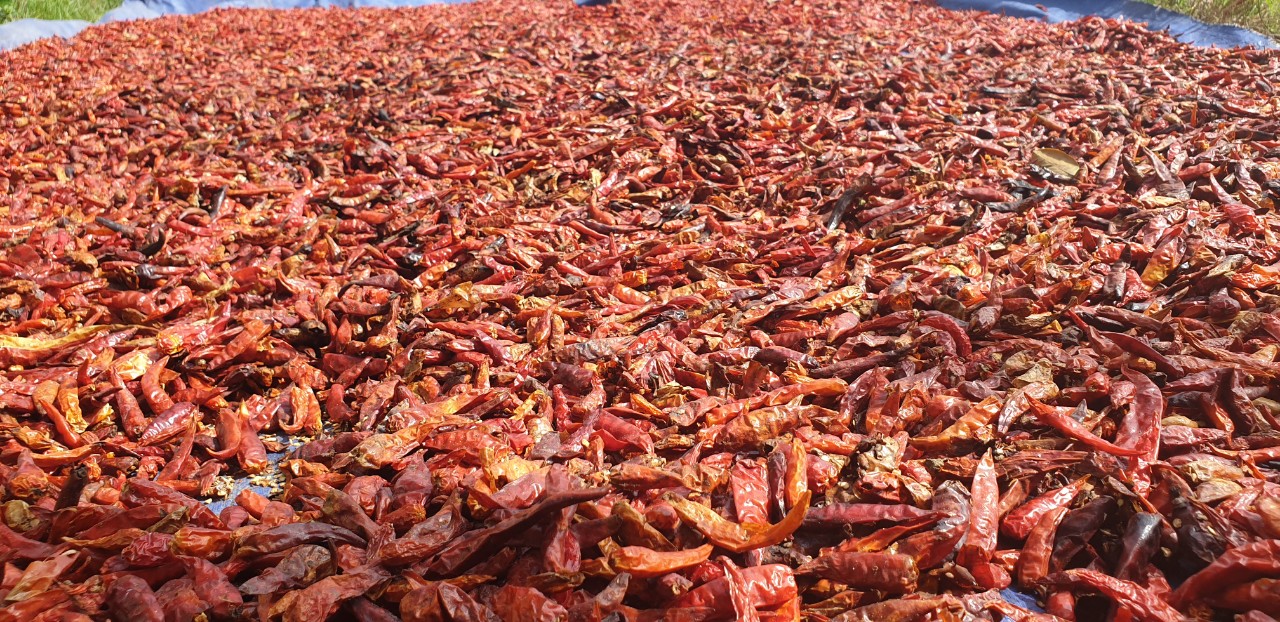
Dried chili peppers for export have been generating significant revenue for Vietnam's agricultural sector. Exporting dried chili peppers instead of fresh ones will help businesses save considerable costs throughout the transportation process. So, what standards should dried chili peppers meet for export. Let's find out more details in the article below.
The potential of dried chili peppers for export
Dried chili peppers are another product of fresh chili peppers that have had their water drained to allow for longer preservation. Dried chili peppers retain a certain amount of nutrients. Therefore, dried chili peppers have been and continue to be an imported item by many countries such as South Korea, China, India…
According to statistics, in 2023, exports of dried chili peppers reached $20 million, equivalent to 10,173 tons, an increase of 107% compared to the previous year. In Vietnam, chili peppers are most widely grown in the provinces of Dong Thap, An Giang, Tien Giang, Soc Trang, Vinh Long, and Tra Vinh, with a total area of 7,000 hectares and a production of approximately 100,000 tons per year.
As a country with a large growing area, exporting dried chili peppers to international markets will help farmers earn higher incomes in the agricultural sector. So what is required when exporting this item to the international market.
What standards must be met for exporting dried chili peppers
Below are the required standards for exported dried chili peppers. All this information is taken from TCVN 2080:2007 of the General Department of Standards, Metrology and Quality, Ministry of Science and Technology.
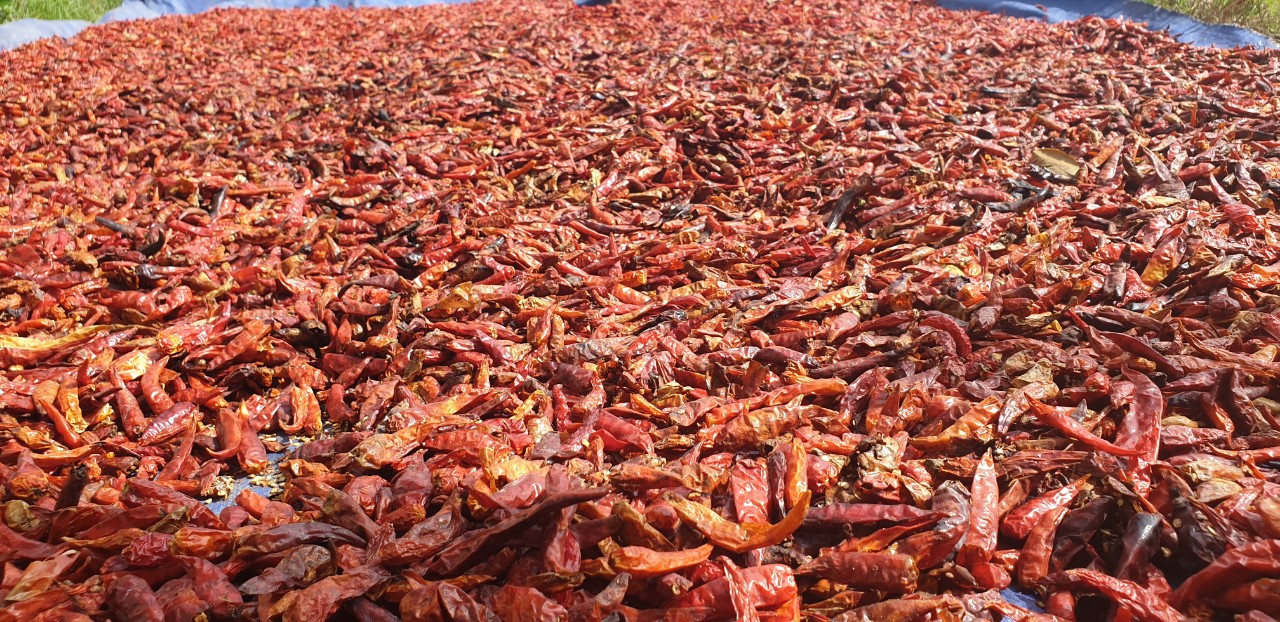
What standards must be met for exporting dried chili peppers
The types of chili peppers used:
- Chilli and capsicum peppers, whole or ground (in powder form).
- Two species of Capsicum peppers are capsicum annuum L. and C.frutescens L., as well as their subspecies such as C.chinense, C.pubescens, and C.pendulum.
- This does not apply to chili powder and ergot (paprika).
The requirements are not specifically defined and are subject to the importer's agreement, including:
- The size, shape, and color of dried chili peppers.
- Spiciness (capsaicinoid content or Scoville index).
- The size of the chili powder's wings (typically the maximum particle size is 500 micrometers).
The smell and taste of chili peppers
- Whole or ground dried chilies have a distinctive spicy flavor that can cause nasal irritation.
- The aroma should be characteristic of chili peppers, creating a lasting, spicy scent.
No insects or mold are allowed
- There must be no live insects or mold.
- There must be no insect carcasses, insect fragments, or rodents visible to the naked eye.
- When abnormalities are observed, in specific cases, they may be magnified up to 10 times for inspection and reporting.
- In case of dispute, the contaminant must be identified using the method prescribed in ISO 1208.
Impurities
Impurities include:
- Substances present in the sample that are not dried chilies need to be considered.
- Other impurities include: stems, leaves, soil, and sand.
- Impurities do not include unripe, damaged, or broken fruit of the types under consideration.
The percentage of impurities must not exceed 1% by weight.
Young fruit, damaged fruit, and broken fruit
- In whole dried chilies, the percentage of unripe or spotted (black or black) chilies must not exceed 2% (m/m).
- The proportion of broken fruit and fragments, respectively, must not exceed 5% (by weight).
Chemical requirements
Whole dried chilies and ground chilies must meet the requirements in the table below:
| Target | Request | Testing method |
| Humidity, % (by weight), maximum | 11 | TCVN 7040 (ISO 939) |
| Total ash, % (by weight), in dry matter, maximum | 10 | TCVN 7038 (ISO 928) |
| Acid-insoluble ash, % (by weight), on a dry basis, maximum | 1.6 | TCVN 5484 (ISO 930) |
Packaging and labeling
Packaging:
- The product must be packaged in clean, intact containers. The containers must be made of materials that are not
This can affect the product. The packaging must protect the product from moisture absorption or loss
Moisture, volatile substances.
- The packaging must also comply with national laws related to environmental protection.
Labeling:
Label each package directly or attach it, ensuring it contains all the following information:
- Product name and trade name (if applicable).
- Name and address of the manufacturer or packer and brand (if applicable).
- Batch code or number.
- Net weight.
- Produced water.
- Any other information as requested by the buyer, harvest year and packaging date (if known).
- Citing applicable quality standards.
Storage and transportation recommendations
- Packages of dried and ground chili peppers must be stored in a sheltered home, away from sunlight, rain, and excessive heat.
- The storage area must be dry, free of unpleasant odors, and free from the entry of insects and other pests.
- Air circulation must be regulated to circulate well in dry weather conditions and completely sealed in humid conditions.
- Appropriate conditions must be in place to disinfect storage facilities.
- The packages must be stored and transported in a way that protects them from rain, sun, or sources of excessive heat, unpleasant odors, and other contaminants (especially in ship drilling).